Old style antennas used wiring/connections that are referred to as 300 ohm twin-lead. Essentially a flat sort of cable with the two wires in it, within the edges.
http://farm4.staticflickr.com/3265/2672657175_10e7849d08.jpg
They either end in the U-shaped connectors that you see in the pic I've linked to, or, quite often, are cut with some of the insulation stripped and the bare copper wire exposed.
The ends, regardless of whether having the U-connectors or just the bare wire, would be wrapped around two screws on the back of the TV that were marked for the antenna, specifically UHF - and possibly VHF.
However, if your TV is newer than those ancient boxes, it'll likely have a coax connector instead. In that case, you'll need something like this 300 ohm to 75 ohm adapter:
https://showmecables-static.scdn3.secure.raxcdn.com/media/catalog/product/cache/image/e9c3970ab036de70892d86c6d221abfe/s/e/separator-combiner-1.jpg
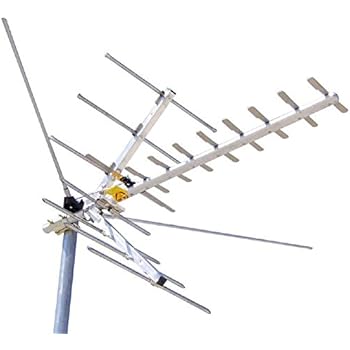
The house I first bought around 1999-2000 (from my parents, who bought it new in 1978) had a huge antenna in the attic, and all the 300-ohm twin-lead wiring still throughout the house. I cancelled my cable TV service (my brother and I didn't watch much TV, and couldn't justify the cost), and simply used the antenna. There was a splitter to run the signal to various rooms in the house.
We got a very clear picture out of it back then. However, I don't know if the old analog signals are still broadcast anymore or not.
I'd thought they were doing away with them, and only broadcasting the digital signals now, even for the basic channels (ABC, CBS, etc), but don't quote me on that.
The wikipedia page on twin-lead (I didn't know it was officially called that before today), which goes into more detail.
https://en.wikipedia.org/wiki/Twin-lead
Given its weaknesses with exposure to metal, weather, etc., I suppose that's why my parents put the antenna inside the attic instead of outside on top of the roof.





 Facebook
 Twitter